Since finishing my course in UX, I’ve had a few people ask me what it was really like and what happened next. I thought I'd share how it unfolded for me here. Online digital courses vary in size and reputation, so here's three ways my course worked for me.
I completed the UX course in 2021 during evenings, weekends and occasional lockdown periods. Since I was already a remote worker, my full-time schedule didn't change, and the time commitment for the course was my biggest challenge. I managed to complete it within the deadline, but I'll confess, there were quite a lot of late nights.
1 Community, collaboration and support
Many tasks require collaboration, and there was a very active Slack channel to facilitate this. I had study buddies and accountability partners with regular check-ins. I was also able to recruit plenty of keen students for surveys, interviews, preference tests, user testing and feedback rounds. Plus I had an assignment tutor, two design mentors, and a career coach providing frequent feedback, support and catch-ups.
I met people with all kinds of backgrounds, including marketing, graphic design, teaching, finance, writing, and it was cool to see how their previous work experience contributed to their UX skills in unique ways. I made a friend from Germany, and I visited her in Berlin just after the course ended. A couple of years later she visited me in Edinburgh.
2 Project-based learning
Every task has a similar structure combining background reading with an assignment. The project work may involve user research, project documenting, or creating designs. This means you are not learning passively, but always problem solving, delivering, and following a process.
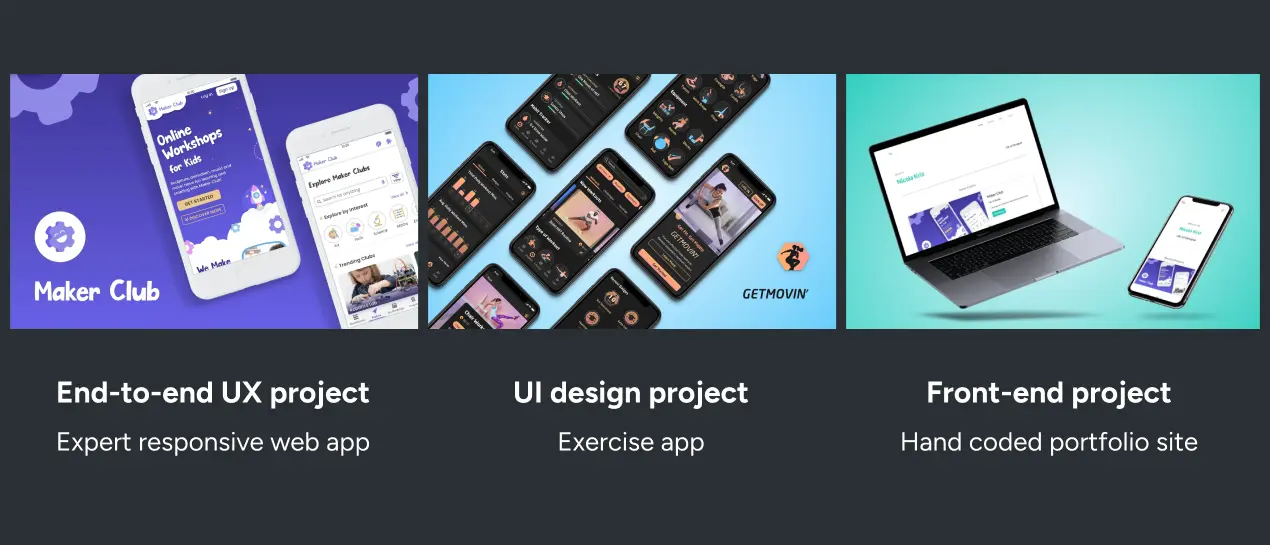
Two of my projects have published case studies online: Maker Club (end-to-end UX) and GetMovin' (UI only). In my work as a UX designer, many of the processes and techniques I practiced in these projects have been put into use, including:
- Competitive analysis
- Agile methodologies
- Business analysis approaches
- Card sorting and information architecture
- UX processes and frameworks (double diamond, UCD)
- User research
- Wire-framing and prototyping
- Communicating designs
3 Practical skills for reaching your goal
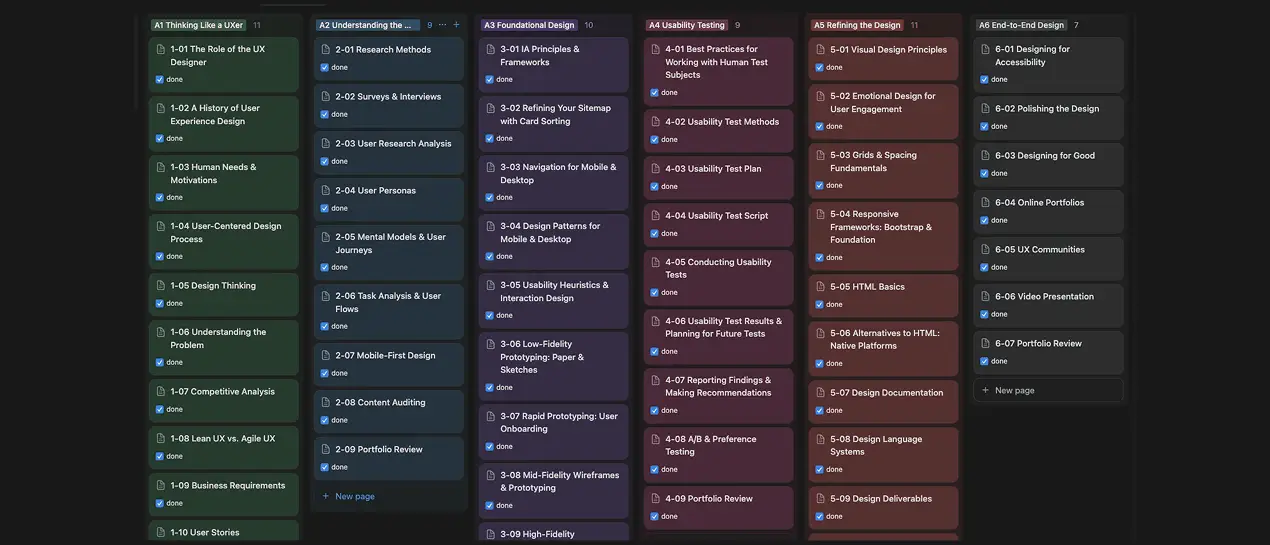
Throughout the main UX course, there are regular checkpoints where you consider how each completed phase contributes to your overall portfolio narrative. By the time you reach job prep, you're refining and polishing something substantial. The checkpoints also involve video submissions which help you practice talking about your work and build confidence far in advance of interviews.
Once I completed the course, things moved fast, and I lined up a few interviews. I felt genuinely prepared for those conversations—not just about design theory, but also in discussing real project work and how my previous role in educational media contributed. I accepted one of the job offers.
The combination of structured learning, connected community, and career support made it worthwhile for me. Feel free to reach out if you have questions about my experience. I'm always happy to answer questions on LinkedIn.